

First time applying for a Horizon Europe project grant? Here is what evaluators look for

Originally published in August 2024 – last updated on 2 September 2026

Horizon Europe is the EU’s flagship funding programme for research and innovation projects and known for its complexity, high standards and strong competition for funding. Successful applicants need to demonstrate a solid alignment with EU priorities and convince the evaluators of the project’s Excellence and Impact. While this may feel intimidating, particularly for first-time applicants, being aware of the following key factors can considerably improve your chances of success when preparing your Horizon Europe application.

Table of Contents

Preparing for a competitive selection process

Horizon Europe is one of the most competitive EU funding programmes, attracting the best research institutions, universities, SMEs as well as big and well-known companies. Success rates can be low and, depending on the individual funding strand and Call, can fall to around 5%. This means that even an excellent project receiving a very high score may ultimately not be selected for funding. Having supported applicants through the full project cycle, from the first draft to the final report, I have seen how thorough preparation can significantly increase your chances of securing funding.

Most Horizon Europe Calls (in particular the Calls under pillar 2 – Global Challenges and European Industrial Competitiveness) require international cooperation, meaning that applicants must build consortia with other suitable partners. As a general rule, the consortium must include at least three independent legal entities established in three different countries: at least one in an EU Member State and at least two others in different EU Member States or Associated Countries, unless the Call specifies different criteria. Beyond this minimum requirement, how many partners you should have in your consortium depends on your specific project’s goals. Each partner must have a clearly defined role and bring added value to the consortium.

The coordinator of the project will be responsible for compiling all necessary information and commitments from the other partners. As lead organisation, the coordinator will have to earmark enough time in advance, for example to collect the necessary documents and information, and to ensure everything is ready before submitting the application via the EU Funding & Tenders Portal. The coordinator will have significant administrative responsibilities and, later-on, if the project is selected for funding, significant reporting responsibilities too. High-quality Horizon Europe proposals typically require several months of thorough preparation, especially if a larger number of project partners are involved.

Looking into and beyond the Call text

In my consultancy work for Horizon Europe, and in my role as an evaluator, I regularly see applicants who have prepared a scientifically sound proposal, but have not read the Call text closely enough to capture the specific priorities the Commission has set for that particular topic. In case you are unsure whether your project idea truly matches what the Call is asking for, it is worth setting aside dedicated time to compare your draft against the Call text line by line, well before you start writing.

First of all, carefully read the published text of the Call for Proposals and make sure your project is aligned with the objectives and expected outcomes stated there. You will also need to read the associated Horizon Europe Work Programme, since it gives further information on the objectives your project is expected to reach, as well as the evaluation criteria. In particular, look at related documents on EU policy priorities and strategies within your thematic area, which may be referenced in the Call text or the corresponding part of the Work Programme. In your application, explain how your project addresses these priorities and strategies.

You will also need to explain in your application what the current state of the art is in your thematic field, and how your project will go beyond what is already known and implemented. To what extent does your project differ from current practice, or brings an important new perspective or approach to previous efforts in the field?

Spotting must-haves for your project in the Call text

When reading the Call text, don’t overlook the fine print. The exact wording is important. Pay particular attention to whether the text states that proposals must, should, are expected to, or are encouraged to address a particular aspect. These formulations do not all carry exactly the same weight, but they provide important signals about the expectations behind the Call.

Where the Call explicitly requires proposals to address several elements – for example A and B – make sure your project covers both. Missing a mandatory or central element of the scope can significantly weaken your proposal.
Given the strong competition for funding, you should also carefully consider how you can respond convincingly to elements that are recommended or encouraged, and not only focusing on the most obvious requirements.

Application forms and procedures

The application process requires filling out extensive forms and providing a comprehensive description of the project’s objectives, methodology, expected impacts and work plan. Requirements regarding submission formalities are binding. For example, there is a strict page limit and page and text formatting is prescribed too. The technical description has to be uploaded onto the application portal as a separate document. Do not exceed the page limit. The system will make excess pages invisible and therefore any information coming beyond the page limit won’t be taken into account in the evaluation.

Proposals must break down the project into clear work packages with specific milestones, deliverables and timelines. Applicants need to create a coherent and realistic plan that demonstrates efficient resource allocation and project management.

Other requirements to address in your proposal

There are a number of other requirements that need to be addressed and explained in the application form and which may however depend on the kind of project you are planning to implement. For example, Horizon Europe applicants need to demonstrate compliance with ethical guidelines, which may require specialised expertise or additional project planning efforts. Other criteria cover various aspects of research and innovation to ensure that projects adhere to the highest standards of integrity and respect for human rights, animal welfare, environmental sustainability, data protection and security. Addressing these requirements appropriately is another important component for the success of any proposal.

Evaluation criteria

When writing your proposal, you already need to think in terms of evaluation criteria: what the externally contracted evaluators of the European Commission will score your proposal against. Each criterion must reach a threshold of 3 out of 5 points, and the overall score must reach at least 10 out of 15 to be considered for funding. For Research and Innovation Actions (RIAs) and Innovation Actions (IAs), the evaluation criteria are:

Excellence: Your project should demonstrate a high level of innovation and scientific quality. In my experience, proposals often lose points here because the innovation framing remains too thin, or the gender dimension is addressed only superficially. Clearly outline the innovation aspects, ambitions, and research methodologies of your project, and make sure to appropriately address the gender dimension, open science practices (sharing and management of research outputs), and the engagement of citizens, civil society, and end users, as appropriate.

Impact: Outline how your project will contribute to the expected impacts of the Call. In my experience, proposals often fall short here when impact claims are not clearly tied to the Call’s actual priorities, or when stakeholder engagement is described too vaguely. This includes societal and economic impacts, as well as how your project addresses EU policies and priorities, such as the Green Deal or the digital transition. Evaluators will also look at your planned dissemination and communication activities. For Innovation Actions, the Impact criterion is weighted at 1.5.

Quality and efficiency of the implementation: In my experience as a consultant and evaluator, I see proposals lose points on Implementation for the same reasons. The budget does not match the described workload, certain partners are given no clearly defined role, or the timeline is simply unrealistic in view of the milestones set out. In particular, you need to make sure your budget actually reflects the workload, every partner has a clear role, and your timeline is one your consortium can realistically deliver on.

Besides, it is also important to place each piece of required information in the correct section of the proposal template. Evaluators may only consider the text provided in the relevant sections when scoring, and cannot assume strengths or potential that have not been explicitly demonstrated.

Mastering the application process for Horizon Europe grants

Successfully applying for a Horizon Europe grant requires a thorough preparation, attention to detail and a good collaboration with your consortium partners. Consortia are required to demonstrate the highest levels of scientific excellence, innovativeness and impact for the proposed project. Begin the process early enough and allocate sufficient time to developing, writing and adapting your proposal.

The preparation of a competitive Horizon Europe proposal can be considered both time-consuming and resource-intensive. However, participating in a Horizon Europe project offers newcomers significant benefits, not only access to substantial funding, but also opportunities for international collaboration and enhanced visibility within the research and innovation community. Newcomers can build valuable networks, gain experience in interdisciplinary projects and enhance their reputation, something they can continue to build on in the future.

Would you like to learn how to develop a clear and competitive Horizon Europe proposal?

Join my upcoming interactive online workshop, Horizon Europe Proposal Writing Workshop for First-Time Applicants, on 8 October 2026. Find more information and registration details here.

Are you planning to apply for Horizon Europe funding? Check out my new free resource to help you write clear, evaluator-aligned proposals that score higher: Horizon Europe Strategic Proposal Language Toolkit


Need support with your Horizon Europe proposal?
Whether you are looking for an expert review, tailored feedback, or more comprehensive proposal-writing assistance, feel free to get in touch to discuss the best way I can help. 

Astrid Mechel - EU Funding Consulting

Author: Astrid Mechel

https://eufundingconsulting.eu

Hello, I’m Astrid Mechel, EU funding expert and trainer. I help organisations develop stronger EU funding proposals, with a particular focus on Horizon Europe. My perspective is shaped by more than 20 years of experience with EU funding programmes, including as a Horizon Europe National Contact Point, within the EU institutions, and as an expert evaluator. I focus particularly on collaborative projects in the areas of environmental sustainability and social impact.

Leave a Reply

Your email address will not be published. Required fields are marked *

Read more articles here:

Online Workshop

EU Funding for Green Transition Projects

Interactive Live Workshop

On 22 May 2025 from 13h00-15h30

Registrations are closing soon 

Kickstart Your EU Funding Journey

Get Ready to Access EU Project Funding

Curious about EU funding and how it could support your next project? Join the new live programme round for a compact and easy-to-follow way to get started with EU funding.

Horizon Europe Toolkit (free resource)

Write Clear, Evaluator-Aligned Horizon Europe Proposals That Score Higher

A practical resource designed to help you write with clarity, credibility, and strategic focus – so you can feel confident that your proposal clearly communicates its value to evaluators.

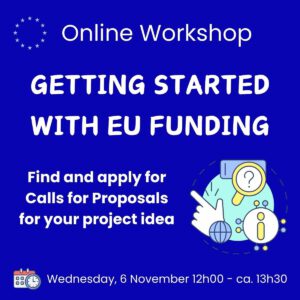
Online Workshop on 6 November!

Getting Started with EU Funding

Find and apply for EU Calls for Proposals for your project idea

The workshop “Getting Started with EU Funding” is for participants with no or very limited experience in EU funding. Discover what kind of projects the EU is funding,  the requirements and how you can apply for funding in your thematic field.

EU Funding Checklist

Does my project idea meet the requirements for EU funding?

Do you have a new project idea and are wondering if EU funding could be available for your project?

This checklist will guide you through the most important questions to be considered when applying for EU project grants and includes some further suggestions how you could adapt your concept to be more in line with EU expectations regarding fundability.

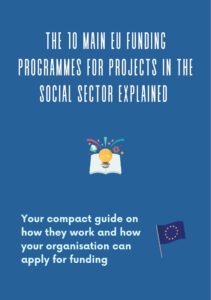
Get the brand new upgraded guidance booklet (free offer):

The 10 Main EU Funding Programmes for Projects in the Social Sector Explained

Your compact guide on how they work and how your organisation can apply for funding

Find out which 10 EU programmes offer grants for projects in the social sector, what the conditions for funding are and how you can apply.

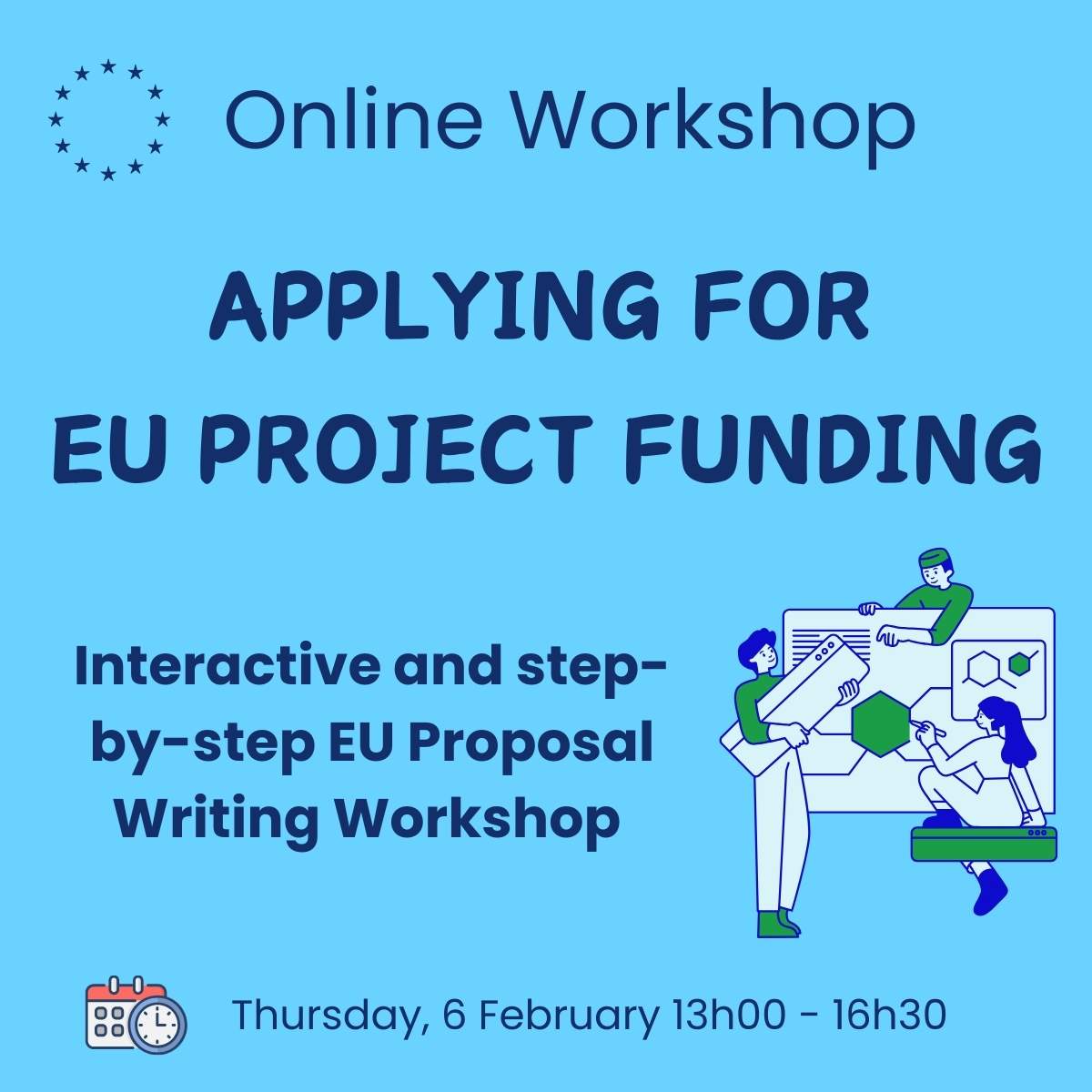
Online Workshop

Applying for EU Project Funding
EU Proposal writing workshop

Interactive and step-by-step EU Proposal Writing Workshop

On 6 February 2025 from 13h00-16h30