From idea to proposal architecture – how strong Horizon Europe proposals are built
A promising project idea is only the beginning. Discover how to shape it into a coherent and convincing Horizon Europe proposal.
Before detailed proposal writing begins, it is worth checking whether your Horizon Europe project concept is clear enough to guide the full application. These 7 readiness checks help you assess the Call fit, project logic, partner roles, impact pathway and work plan, so you can avoid weak structure, contradictions and unclear responsibilities later.
You have a Horizon Europe project idea, and a relevant Call for Proposals is open. Your consortium may already be discussing work packages, budgets and partner contributions. At that point, perhaps you are already opening the proposal document and beginning to fill in sections.
This can be a valuable part of the process. Early writing can also start an important thinking process, especially for the coordinator. It can help make gaps visible, test the logic of the project and show where further clarification is needed. These points can then be discussed with the partners, especially where strategic gaps occur and common decisions have to be made.
However, many Horizon Europe proposals can become difficult to develop later when the consortium starts contributing to the text before some essential strategic questions have been clarified. This can happen when sections are divided up too early, but also when everyone is free to add comments, ideas or text to a common working document.
I have seen this in proposals I supported as a consultant: the consortium works in a shared Google document, many partners contribute from their own perspective, and the proposal gradually becomes harder to keep coherent. The result is often a proposal that grows, but without enough shared logic underneath.
As the proposal develops, objectives may shift, partner roles may still need to be refined, implementation structures may not fully support the project ambition, or impact pathways may feel disconnected from the work plan.
Before detailed drafting begins, it can be worth stepping back and asking whether the project concept is already developed enough to guide the proposal – or whether the logic behind it still needs to be strengthened.
These seven readiness checks can help you get more clarity on where your project stands:
A Horizon Europe proposal does not only need to present a good project idea. It needs to show that the project is the right response to a specific Call and topic.
The consortium should be able to explain how the project responds to the topic scope, the expected outcomes and the wider policy or programme logic behind the topic. If the proposal team can only say that the idea is “relevant” or “linked” to the topic, this may not yet be enough. At this stage, the consortium should be able to explain which problem, gap or need the proposal is responding to, and why the project is a suitable response at European level.
If the project does not clearly fit what the topic asks for, the proposal may later need substantial restructuring.
Many early-stage project ideas are still too broad. They may describe an ambition, a thematic area or a general direction, but not yet a sufficiently precise project objective. However, the project objective should guide the proposal as a whole.
If the objective is too vague, it becomes harder to define the methodology, the expected results, the impact pathway and the work plan. The proposal may then start to feel like a collection of related activities rather than one coherent project.
A practical readiness check is whether the consortium can formulate the overall project objective in a way that is clear, specific and aligned with the topic.
The objective does not need to be perfect from the first day. It may still evolve. But it should already provide enough direction for the proposal team to understand what the project is really trying to achieve.
At this stage, the consortium should have a reasonably clear view of what the project is expected to produce, develop, test, demonstrate, validate, compare, implement or deliver.
This is important because the expected results help clarify the direction of the project. They show what the methodology needs to make possible, what the work plan needs to organise, and what the impact logic can realistically build on.
Consortia should be able to identify the main expected results and explain how they relate to the Call’s expected outcomes. These results do not necessarily need to be final deliverable titles yet, but there should already be a shared understanding of what the project is meant to generate, improve or demonstrate.
The main question here is: If the project is successful, what will exist, be improved, be demonstrated or be possible at the end that is not sufficiently available now?
A common weakness in Horizon Europe proposals is that the methodology is described as a series of activities, without explaining convincingly how these steps lead from the starting point to the expected results.
This includes the main approach, the sequence of work, the role of different disciplines or sectors, the involvement of stakeholders or users where relevant, and the way results will be tested, validated or applied.
The key question here is: Why is this the right approach to achieve the project objectives?
A Horizon Europe consortium should not look like a list of organisations that happen to be interested in the topic.
Each partner should have a clear reason to be involved, and their role should make sense in relation to the topic, the methodology, the work plan and the expected impact.
This is one of the areas where early clarification is particularly important. Once partners are already involved, it can become politically and practically difficult to adjust roles, address gaps or reduce unnecessary complexity.
Early in the process, it is worth checking your consortium:
Which functions are essential for this project?
Which partners cover which expertise, capacity or stakeholder connection?
Are any roles overlapping too much?
Are any important functions missing?
Is the consortium credible not only in general terms, but in relation to the concrete work that needs to be delivered?
Impact is often one of the most challenging parts of a Horizon Europe proposal.
Many consortia can describe why their topic matters, as well as strong ambitions for future use, uptake or contribution to policy, practice, research, industry or society.
A convincing impact section needs more than a general statement of importance. It needs to show a credible pathway from what the project will do and produce towards the outcomes and wider impacts described in the topic.
The key question here is: What change is the project expected to contribute to, through which results, and for whom?
Discussing work packages early can be helpful, but it can also create problems if the work plan develops before the core proposal logic is sufficiently clear.
A strong work plan should not just divide tasks between partners, but rather translate the proposal logic into a credible implementation structure.
The work packages, tasks, deliverables and milestones should reflect the objectives, methodology, expected results and impact pathway. They should help evaluators understand how the project will be delivered in a realistic and manageable way.
The consortium should therefore check whether the emerging work plan already tells a coherent delivery story.
Does the sequence make sense?
Are the interdependencies clear?
Do the work packages support the objectives?
Are the main outputs and milestones meaningful?
Does the implementation structure match the level of ambition?
Evaluators assess the proposal as submitted. They cannot give credit for strategic logic, clearer partner roles or stronger implementation structures that the consortium may still develop later.
When the proposal logic is clarified early, drafting usually becomes more focused. Partners understand the direction of the project more clearly, and repetition, contradictions and disconnected sections are easier to avoid.
This does not mean that everything must be fully decided from the beginning. Horizon Europe proposal development is naturally iterative, and writing can be part of that process. Sometimes the first outline, concept note or draft section helps the coordinator see more clearly what still needs to be decided.
The important point is that these open questions should be brought back into the consortium discussion, so that partners can agree on the strategic choices behind the proposal. Otherwise, the text may start to accumulate before the shared rationale is sufficiently clear – for example, when several partners add input to the same document, each from their own perspective.
The earlier the strategic foundation is set, the easier it becomes to write a proposal that is coherent across Excellence, Impact and Quality and efficiency of implementation.
Clarifying the readiness gives the consortium a chance to strengthen the foundation before investing too much time in text that may later need to be rewritten. It also helps coordinators guide the proposal process more strategically, especially when several partners are involved and each partner sees the project from a different perspective.
A Horizon Europe proposal is not built by simply filling in the template. It needs a clear response to the Call topic, a convincing project logic, credible partner roles, a realistic impact pathway and an implementation structure that brings everything together.
This is exactly what we work through in my Horizon Europe Proposal Writing Mastery group programme.
Across seven weeks, we move step by step through the key parts of a Horizon Europe collaborative proposal – from Call topic interpretation and proposal architecture to Excellence, Impact, Quality and efficiency of implementation, and budget logic.
The aim is not only to help you write more clearly, but to help you build a proposal that makes strategic sense as a whole.
If you are preparing a Horizon Europe collaborative proposal and recognise that your project still needs a more coherent structure, this is the kind of work we will do together in the programme: developing each key section with expert guidance, while keeping the overall logic clear, consistent and convincing for evaluators.
You will find the programme details here. In case you have any questions about the programme or need other support for developing your proposal, don’t hesitate to get in touch.
Are you planning to apply for Horizon Europe funding? Check out my free resource to help you write clear, evaluator-aligned proposals that score higher: Horizon Europe Strategic Proposal Language Toolkit
—
Would you like to learn how to develop a clear and competitive Horizon Europe proposal?
Join my upcoming interactive online workshop, Horizon Europe Proposal Writing Workshop for First-Time Applicants, on 8 October 2026. Find more information and registration details here.

Author: Astrid Mechel
https://eufundingconsulting.eu
Hello, I am Astrid Mechel and I work (for the most part) with small and medium sized organisations who aim to access EU funding. It is my goal to help discovering suitable EU project funding possibilities and to provide support to submit a high-quality grant application. My main thematic focus is on grants for research and innovation, environmental sustainability as well as on social inclusion and participation.
Read more articles here:
A promising project idea is only the beginning. Discover how to shape it into a coherent and convincing Horizon Europe proposal.

Preparing for EU funding for the post-2027 period? Learn what organisations can do now to align with policy shifts, build partnerships and strengthen readiness.

EU project funding for nonprofits: Discover 6 misconceptions that hold organisations back and how to turn them into opportunities for growth and impact.
Online Workshop
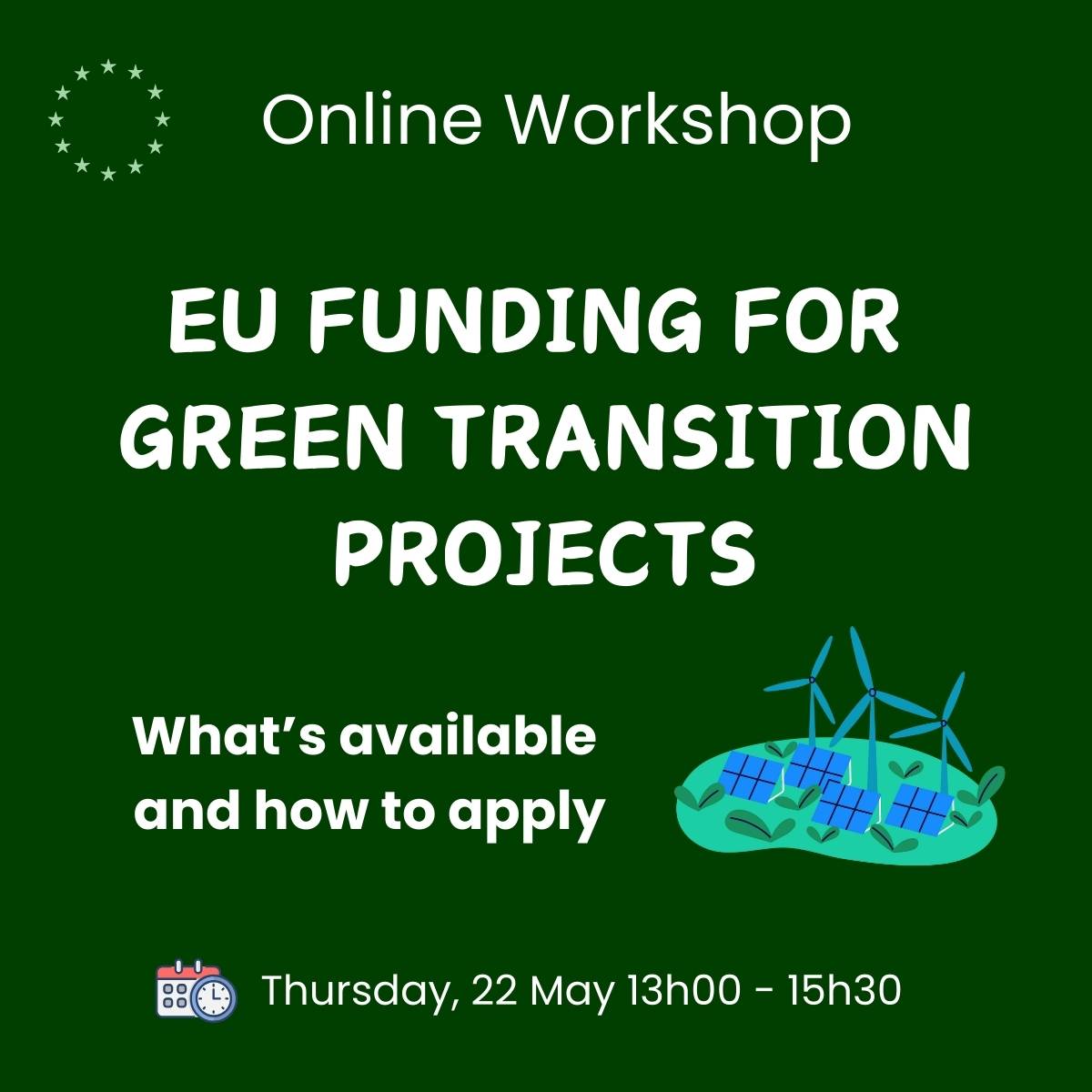
Interactive Live Workshop
On 22 May 2025 from 13h00-15h30
Registrations are closing soon
Curious about EU funding and how it could support your next project? Join the new live programme round for a compact and easy-to-follow way to get started with EU funding.
Horizon Europe Toolkit (free resource)
A practical resource designed to help you write with clarity, credibility, and strategic focus – so you can feel confident that your proposal clearly communicates its value to evaluators.
Online Workshop on 6 November!
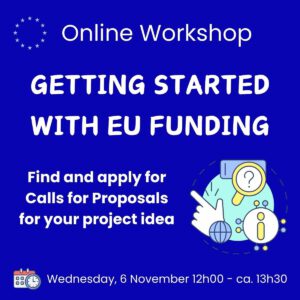
The workshop “Getting Started with EU Funding” is for participants with no or very limited experience in EU funding. Discover what kind of projects the EU is funding, the requirements and how you can apply for funding in your thematic field.
EU Funding Checklist
Do you have a new project idea and are wondering if EU funding could be available for your project?
This checklist will guide you through the most important questions to be considered when applying for EU project grants and includes some further suggestions how you could adapt your concept to be more in line with EU expectations regarding fundability.
Get the brand new upgraded guidance booklet (free offer):
Your compact guide on how they work and how your organisation can apply for funding
Find out which 10 EU programmes offer grants for projects in the social sector, what the conditions for funding are and how you can apply.
Online Workshop
Interactive and step-by-step EU Proposal Writing Workshop
On 6 February 2025 from 13h00-16h30