

From Call Text to Project Concept - How to Analyse a Horizon Europe Call Strategically

This article walks you through six aspects of a Horizon Europe Call that should shape your project concept from the start. Each one helps you analyse what the Call expects and what this means for your objectives, consortium and impact pathway.

Table of Contents

Beyond the thematic match

You have found a Horizon Europe Call that looks promising. The topic addresses an area in which your organisation has considerable expertise. The keywords are familiar, the funding opportunity seems relevant, and perhaps you already have a project idea or potential consortium partners in mind.

It looks like a good match. However, a good thematic match does not automatically mean that your project idea is well aligned with the Call’s expectations.

A closer examination might reveal that the Call places particular emphasis on the uptake of research results, expects demonstration activities in real-world settings, or requires a level of interdisciplinary cooperation that your original project concept does not yet address. These details can have significant implications for your project design, the partners you need and, ultimately, the quality of your proposal.

This is why I encourage Horizon Europe applicants to spend sufficient time analysing a Call before they start developing their proposal.

Here are six aspects worth paying particular attention to:

(1) Start with the bigger picture: Why is the EU funding this topic?

When you identify an interesting funding opportunity, it is tempting to focus immediately on the topic description.

However, Horizon Europe topics are part of a broader strategic framework. Understanding this context helps you recognise what the European Commission ultimately aims to achieve through the funding.

For Horizon Europe’s thematic Clusters, the Work Programmes describes the challenges to be addressed and the Expected Impacts of the funded research and innovation activities. 

Individual topics describe the Expected Outcomes and the Scope of the activities to be funded. These levels are connected:

  • Expected Impacts: The wider, long-term effects on society, the environment, the economy and science to which the funded projects should contribute
  • Expected Outcomes: The medium-term effects expected from the results of the projects funded under a topic, such as the uptake, use or deployment of results by specific target groups
  • Scope: The research and innovation areas that need to be addressed to achieve those outcomes, generally without prescribing how this should be done


In short, your project produces results, these results should lead to the topic’s Expected Outcomes, and these outcomes in turn contribute to the Expected Impacts.

Understanding this broader context helps explain why the Call places emphasis on certain results, target groups or implementation approaches.

Before developing your proposal, consider: What wider European challenge is this funding intended to address, and how could our project make a meaningful contribution?

(2) Expected Outcomes and Expected Impacts: Two levels of change your project should contribute to

The Expected Outcomes and Expected Impacts describe different levels of change that the European Commission aims to achieve through the funding. Understanding how your project can contribute to both is essential for a convincing proposal.

Your project results form the starting point of this chain. Through their uptake and use by relevant target groups, they should lead to outcomes, which in turn contribute to wider, longer-term impacts.

Consider a hypothetical Call addressing innovative solutions for more sustainable industrial processes. Your organisation might have an excellent idea for a new technology that reduces energy consumption in manufacturing:

  • Result: The new technology, validated in an industrial environment
  • Expected Outcome: Its adoption by European manufacturers, leading to more energy- and resource-efficient production processes
  • Expected Impact: A contribution to a climate-neutral and competitive European industry


If the Expected Outcomes emphasise uptake by European manufacturers, technological development alone will not provide a sufficiently convincing response. You would also need to consider who could use the technology, what would enable its adoption and how your project could support this process. And to address the Expected Impacts, you should show how this adoption, at scale, could help bring about the wider changes the Call is aiming for.

When analysing the Expected Outcomes and Expected Impacts, pay particular attention to:

  • The changes envisaged at each level, and whether projects are expected to contribute to all or only some of the listed Expected Outcomes
  • The target groups expected to take up the results and what could enable or hinder their use
  • The wider, long-term changes to which your project could plausibly contribute


These elements should shape your project objectives, methodology, consortium composition and impact pathway from the very beginning.

(3) Read the Scope carefully and identify where you have flexibility

The Scope provides further guidance on the research and innovation activities that should be addressed. It may refer to particular challenges, technologies, approaches, sectors, stakeholder groups or other aspects that applicants need to consider.

Some topics are relatively specific about what should be covered. Others leave considerably more flexibility for applicants to develop their own approaches.

In fact, one of the changes introduced in the Horizon Europe Work Programme 2026–2027 is the use of shorter, less prescriptive topic descriptions, giving applicants greater flexibility in how they respond to the Expected Outcomes. This makes careful interpretation particularly important.

When you read the Scope, distinguish between the elements your project needs to address and those where you have room to propose your own approach.

Pay attention to the language used. For example, expressions such as should address, is expected to or may include can indicate different expectations. However, their meaning always needs to be considered in the context of the complete topic description.

Also look for references to other EU initiatives, existing research results, relevant policies or opportunities for cooperation. These can provide important indications of how the proposed project is expected to contribute to the wider research and innovation landscape.

The aim is to identify the boundaries within which you can develop a project that is both innovative and well aligned with the Call.

(4) Translate your Call analysis into project and consortium decisions

A strategic Call interpretation goes beyond understanding the topic description. It means connecting the Call’s expectations directly to your specific project.

Let’s take an example. Imagine a Horizon Europe topic on improving the climate resilience of European cities. Your organisation specialises in developing innovative tools for assessing climate risks. You have a promising idea for a new decision-support tool and initially envisage a consortium consisting mainly of research institutions and technology developers.

The topic appears closely aligned with what you would like to develop. However, your analysis of the Expected Outcomes and Scope reveals an emphasis on the practical use of climate adaptation solutions by local authorities, their integration into urban planning processes and the involvement of relevant stakeholders.

These expectations could have several implications for your project:

  • Project objectives: Your objectives may need to go beyond developing a new tool and include demonstrating its practical value for urban adaptation planning
  • Methodology: You may need to incorporate activities to test and validate the tool in real municipal planning contexts
  • Consortium composition: Local authorities and organisations with relevant expertise in urban planning or stakeholder engagement could become important partners
  • Impact pathway: You will need to explain how your project will enable the uptake of the tool by its intended users, leading to improved climate adaptation decisions, and how this could contribute to the Call’s wider aim of strengthening climate resilience


These aspects need to be reflected in a coherent and convincing project concept. Your Call analysis, and the implications you derive from it, should then guide your consortium development and detailed work planning.

Otherwise, you risk building a project around the expertise and partners already available, only to discover later that important capacities or activities are missing.

A well-interpreted Call gives you a stronger basis for deciding what your project should achieve, how it should be implemented and who needs to be involved.

(5) Don't overlook the specific conditions

Beyond the Expected Outcomes and Scope, each topic also has conditions that can affect your proposal preparation. Some are administrative or financial, but they can have important strategic implications.

For example, check:

  • The type of action: Is the topic a Research and Innovation Action (RIA), Innovation Action (IA), Coordination and Support Action (CSA) or another type of action? This affects the nature of the activities and the funding rates. Also check whether the topic uses lump sum funding
  • The indicative EU contribution and topic budget: What scale of project does the funding envisage, and how many projects are expected to be funded?
  • Eligibility and other participation conditions: Are there specific requirements concerning the consortium, participating organisations or countries?
  • Topic-specific requirements: Are particular technology readiness levels, demonstration settings or other conditions specified?
  • Submission arrangements: What are the deadlines, and is the topic organised as a single-stage or two-stage application?


The topic page on the EU Funding & Tenders Portal provides the relevant conditions and links to the applicable Work Programme and General Annexes.

Checking these details early shows you whether your project fits the funding framework. This helps you avoid major changes before submission or lost points in the evaluation.

(6) Use your analysis to assess whether the Call is right for your project

After examining the Expected Impacts, Expected Outcomes, Scope and specific conditions, you should have a clearer understanding of what the Call is asking for.

Then check how well your original idea fits:

Can our project make a convincing contribution to the Expected Outcomes and the Expected Impacts? Look beyond the general relevance of your topic. Consider which results your project would produce, which outcomes these results could lead to, and how these outcomes could contribute to the wider impacts envisaged by the Call.

Do we have a credible approach to addressing the Scope? Can you develop objectives, activities and a methodology that respond convincingly to the topic’s requirements and expectations?

Can we bring together the expertise and capacities needed? Check whether your organisation and prospective partners collectively have the expertise, resources and implementation capacities needed to deliver the proposed project.

Your analysis may confirm that your original concept is well aligned with the Call. It may also reveal opportunities to strengthen or adjust the idea, involve additional partners or develop a different implementation approach. And sometimes, it may become clear that another funding opportunity would be a better fit.

Making this assessment early can save considerable time and help you focus your proposal development efforts where they have the greatest value.

From Call interpretation to a convincing Horizon Europe proposal

A careful Call analysis provides the foundation for many of the decisions you will make during proposal development. It helps you formulate meaningful objectives, develop a credible methodology, identify the expertise needed in your consortium and explain how your project will contribute to the Expected Outcomes and the wider Expected Impacts. It also helps you build the connections between Excellence, Impact and Implementation that evaluators need to see in a coherent proposal.

Taking the time to interpret a Horizon Europe Call strategically is therefore a valuable investment in the quality of your proposal.

—

Preparing a Horizon Europe proposal for 2027?

If you’re planning to coordinate a Horizon Europe proposal or take on a more strategic role within a consortium, my Horizon Europe Proposal Writing Mastery Programme is designed to help you strengthen your proposal development skills.

Starting on 26 November 2026, this eight-session guided group programme takes you through the key building blocks of a competitive Horizon Europe proposal, from strategic Call interpretation and project concept development to Excellence, Impact, Implementation and budget planning. You’ll gain practical guidance, structured learning opportunities and expert feedback to help you develop a coherent, evaluator-aligned proposal.

Find out more about the Horizon Europe Proposal Writing Mastery Programme

Astrid Mechel - EU Funding Consulting

Author: Astrid Mechel

https://eufundingconsulting.eu

Hello, I’m Astrid Mechel

I help organisations secure EU funding through tailored advice and practical workshops. With more than 20 years of experience in EU funding programmes and policies, I bring deep, hands-on expertise from multiple perspectives. I’ve written successful EU grant applications myself, advised applicants as a National Contact Point for Horizon 2020 and Horizon Europe, and worked in an EU Executive Agency – including as a panel moderator. Today, alongside my core work, I occasionally serve as an expert evaluator, giving me a clear and up-to-date view of how proposals are assessed.

Specialising in Horizon Europe grants for research and innovation, environmental sustainability, and social impact, I help organisations navigate the complexities of EU funding and maximise their proposal’s chances of success.

Leave a Reply

Your email address will not be published. Required fields are marked *

Read more articles here:

Online Workshop

EU Funding for Green Transition Projects

Interactive Live Workshop

On 22 May 2025 from 13h00-15h30

Registrations are closing soon 

Kickstart Your EU Funding Journey

Get Ready to Access EU Project Funding

Curious about EU funding and how it could support your next project? Join the new live programme round for a compact and easy-to-follow way to get started with EU funding.

Horizon Europe Toolkit (free resource)

Write Clear, Evaluator-Aligned Horizon Europe Proposals That Score Higher

A practical resource designed to help you write with clarity, credibility, and strategic focus – so you can feel confident that your proposal clearly communicates its value to evaluators.

Online Workshop on 6 November!

Getting Started with EU Funding

Find and apply for EU Calls for Proposals for your project idea

The workshop “Getting Started with EU Funding” is for participants with no or very limited experience in EU funding. Discover what kind of projects the EU is funding,  the requirements and how you can apply for funding in your thematic field.

EU Funding Checklist

Does my project idea meet the requirements for EU funding?

Do you have a new project idea and are wondering if EU funding could be available for your project?

This checklist will guide you through the most important questions to be considered when applying for EU project grants and includes some further suggestions how you could adapt your concept to be more in line with EU expectations regarding fundability.

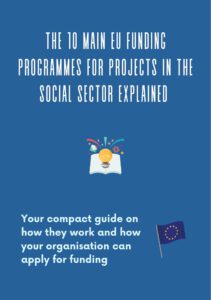
Get the brand new upgraded guidance booklet (free offer):

The 10 Main EU Funding Programmes for Projects in the Social Sector Explained

Your compact guide on how they work and how your organisation can apply for funding

Find out which 10 EU programmes offer grants for projects in the social sector, what the conditions for funding are and how you can apply.

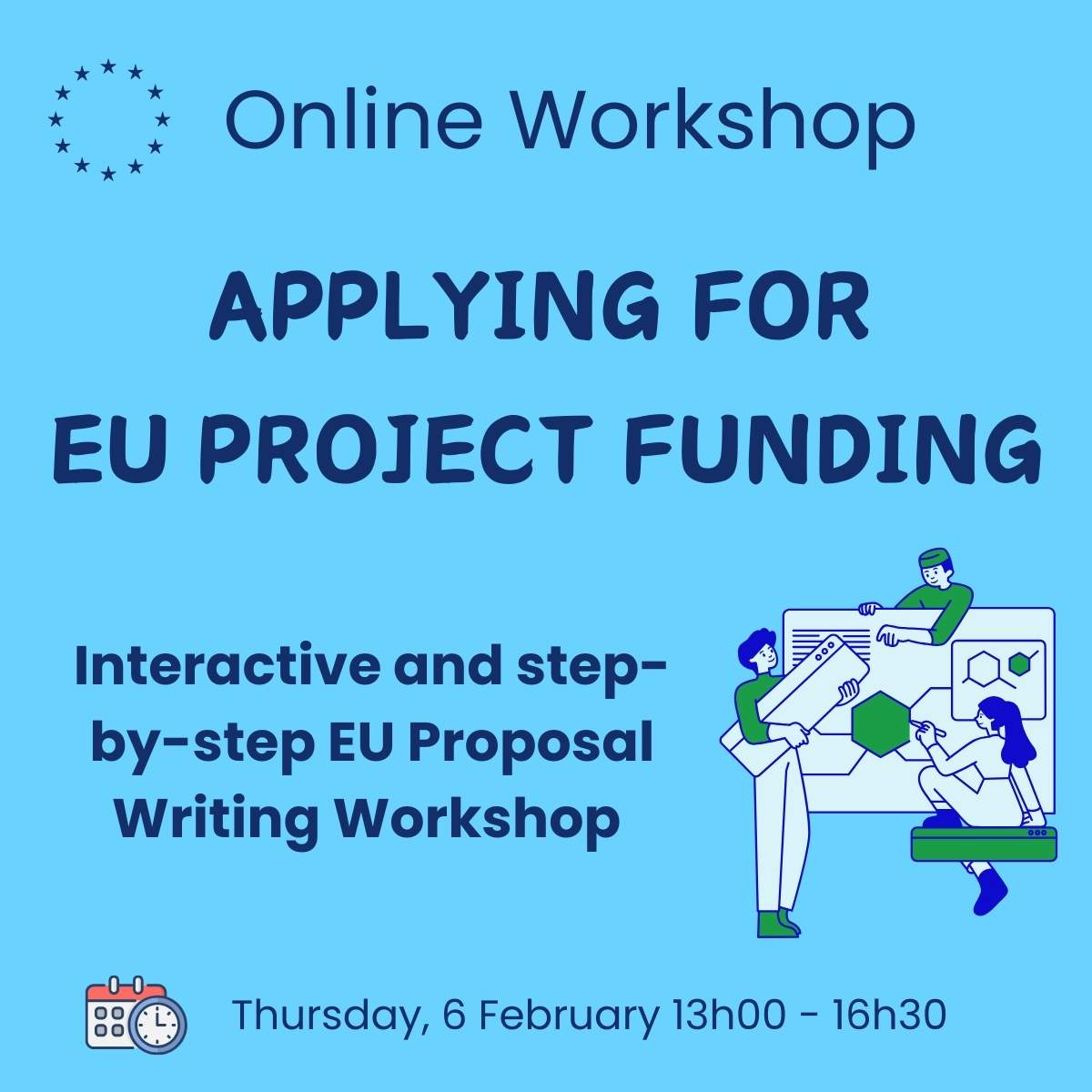
Online Workshop

Applying for EU Project Funding
EU Proposal writing workshop

Interactive and step-by-step EU Proposal Writing Workshop

On 6 February 2025 from 13h00-16h30