
EU grants and nonprofits: 6 common misconceptions unpacked as opportunities
EU project funding for nonprofits: Discover 6 misconceptions that hold organisations back and how to turn them into opportunities for growth and impact.
The EU has started shaping its next Multiannual Financial Framework (MFF) for 2028-2034, including its associated funding programmes. For organisations that benefit from – and in some cases even (partially) depend on – European funding, this raises important questions about future opportunities. Universities, research institutes, NGOs, public authorities, and companies alike are now asking what to expect from the next EU budget cycle.
The EU’s plans for a reshaped funding architecture – including the proposed creation of a European Competitiveness Fund and changes to established programmes such as Horizon Europe and LIFE – point to potential shifts in priorities, access conditions and funding mechanisms from 2028 onwards.
While EU negotiations follow the principle that “nothing is agreed until everything is agreed”, waiting for the new framework to be finalised is rarely the most effective strategy for preparing for the next funding cycle. This article outlines five key steps organisations can already take in 2026 to position themselves for success under the 2028-2034 programmes. It also highlights the broader shifts underway in EU funding priorities and explains how organisations can align their strategies with emerging policy directions, build strategic partnerships, and adapt internal processes to the future funding landscape.
While the details of the next MFF are still being negotiated, the overall direction is already becoming clearer. Although priorities are being rebalanced, the focus is expected to centre on several key areas:
The green transition and environmental resilience
Climate mitigation, biodiversity protection, the circular economy, pollution reduction and nature restoration will remain core pillars of EU policy. Even if dedicated programmes such as LIFE are integrated into broader funding instruments, the underlying policy mandate is unlikely to weaken. Environmental and climate objectives are expected to remain key drivers of funding priorities across several programmes.
Competitiveness and industrial leadership
A closer connection between research, innovation and deployment is increasingly visible in discussions on the next MFF. Funding programmes are likely to place somewhat more emphasis on supporting projects as they progress beyond the research phase towards market or operational use. This does not suggest a shift away from supporting early-stage research. Rather, even low-TRL projects may be encouraged to situate their work within plausible longer-term innovation pathways, for instance by acknowledging broader value chains or by reflecting on how results could eventually be taken forward by other actors at later stages of the innovation cycle.
Strategic sectors and technological sovereignty
Strategic sectors such as digital technologies, artificial intelligence, semiconductors, cybersecurity, space, defence, clean technologies and energy resilience are set to remain high on the EU agenda. Compared to previous funding cycles, organisations active in these areas can expect increased attention and, potentially, a broader range of funding opportunities.
Cross-cutting priorities
Cross-cutting objectives – including sustainability, skills development, societal readiness and territorial cohesion – are expected to remain embedded across EU programmes. These elements are likely to feature not only as standalone topics, but also as horizontal considerations shaping project design, partnerships and expected impacts.
Understanding these high-level priorities helps organisations calibrate their long-term strategies. As before, funding proposals in the 2028–2034 cycle will be expected to align clearly with the EU’s political agenda, and not only scientific or organisational priorities.
One of the biggest challenges for beneficiaries is the administrative complexity of EU programmes. Regardless of how streamlined or restructured the future funding architecture becomes, organisations with solid internal capacity will always have an advantage.
To be ready, strengthen your project management capacity and financial administration systems. This includes dedicated staff who know EU rules, reporting requirements, cost structures, legal aspects and intellectual property protection, to name a few.
Be sure to have your internal approval processes lean and sorted. Avoid overly complex decision-making mechanisms for joining consortia or responding to Calls. Many organisations lose opportunities simply because they cannot mobilise internally fast enough.
Train researchers and other staff early. Workshops on proposal writing, impact design, exploitation strategies, and stakeholder engagement can significantly increase success rates. Early training can also familiarise researchers and staff with emerging policy priorities and programme narratives, helping them position ideas more effectively from the outset.
EU funding is built on collaboration, and the strongest consortia are often formed even before Calls have been opened. The recent publication of the Horizon Europe Work Programmes 2026-2027 including indicative Call opening periods provides an excellent basis.
What you can already do is identify strategic partners across sectors, including research institutions, SMEs and industry actors, NGOs and civil society, public authorities, technology providers, clusters and innovation hubs, or European networks and platforms.
Also, memberships in industry associations, research alliances, European Partnerships, and thematic platforms provide insights and early intelligence on new developments and priorities. These networks also give visibility, a critical aspect for organisations that envisage to coordinate proposals or become valuable partners, and enable shared learning.
Before new programmes launch, organisations can position themselves by establishing or further strengthening a solid track record in 2026-2027, enhancing their readiness for EU funding in the longer term. This can include joining consortia as a work package leader, coordinating pilot projects where feasible, publishing success stories and case studies, and demonstrating the capacity to deliver high-quality results consistently.
Beyond individual projects, credibility is also built through thematic focus, reliability as a partner, and visible engagement in European networks and initiatives. Demonstrating how results are sustained or taken forward over time further strengthens this profile. A strong track record of visibility and trust remains a key factor in consortium selection.
Finally, being prepared is key. Stay up-to-date with new developments related to the MFF negotiations between the European Commission, Parliament and Council, as well as in the policy area in your field and related stakeholder consultations so that your organisation can contribute or contact the negotiating institutions or national ministries (see also my previous article on Stakeholder engagement in the development of EU funding programmes – Who, when and how?).
Also, understanding associated EU policy frameworks such as on taxonomy, sustainability reporting, industrial strategy, data legislation, etc. will help organisations position their projects as relevant, beyond the state of the art, and impactful.
Assign someone internally to monitor these developments. If possible, engage in consultations or position papers through networks and alliances.
No one can predict exactly how the post-2027 EU funding programmes will ultimately look. However, the overall direction towards competitiveness, strategic autonomy, green and digital transformation, impact and sustainability is already visible.
Future-proofing your EU funding strategy means laying – or strengthening – the right foundations now. By building strategic partnerships, strengthening organisational capabilities, aligning with EU priorities, optimising internal processes and adopting an impact-oriented project design mindset, organisations can position themselves as effectively as possible for success under the next MFF.
Would you like to step up your game in EU funding? Check my proposal writing support offers, online workshops, or the custom/tailor-made seminars option for your organisation.

Author: Astrid Mechel
https://eufundingconsulting.eu
Hello, I am Astrid Mechel and I work (for the most part) with small and medium sized organisations who aim to access EU funding. It is my goal to help discovering suitable EU project funding possibilities and to provide support to submit a high-quality grant application. My main thematic focus is on grants for research and innovation, environmental sustainability as well as on social inclusion and participation.
Read more articles here:
EU project funding for nonprofits: Discover 6 misconceptions that hold organisations back and how to turn them into opportunities for growth and impact.

Applying for EU funding can be a complex and challenging. This article offers 12 practical tips to help you avoid the most common stumbling blocks.

Winning Horizon Europe funding takes more than a great idea – it requires strategy, clear messaging, and a good understanding how proposals are evaluated.
Online Workshop
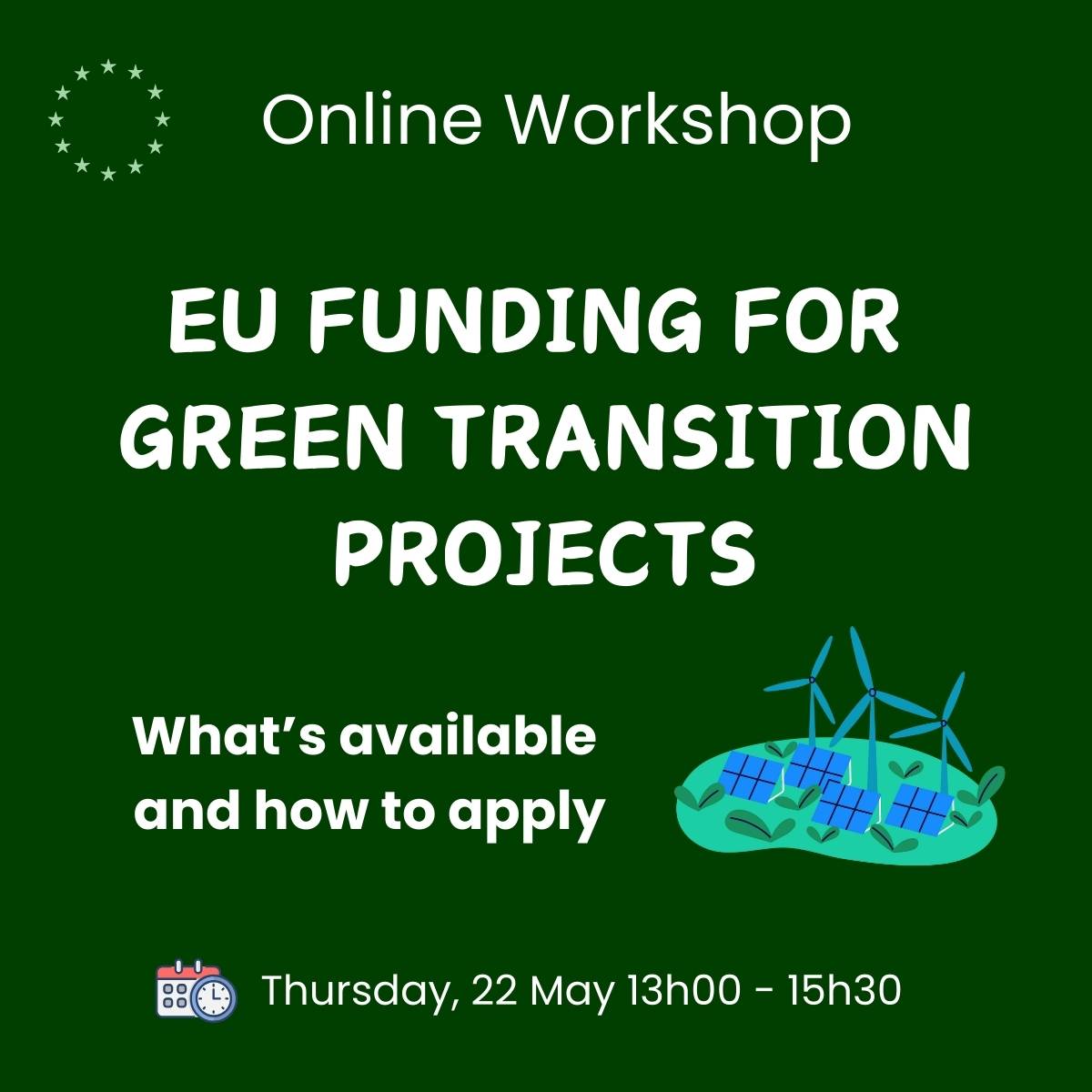
Interactive Live Workshop
On 22 May 2025 from 13h00-15h30
Registrations are closing soon
Curious about EU funding and how it could support your next project? Join the new live programme round for a compact and easy-to-follow way to get started with EU funding.
Key Terminologies – Application Guidance

This guidance compares and compare and clarifies the 10 key terminologies within an EU funding application. How should you address them in your proposal, and what kind of information belongs to which one of them?
Online Workshop on 6 November!
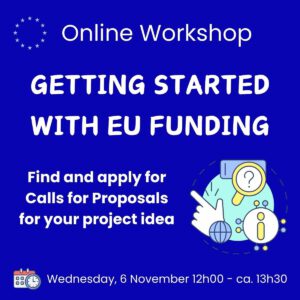
The workshop “Getting Started with EU Funding” is for participants with no or very limited experience in EU funding. Discover what kind of projects the EU is funding, the requirements and how you can apply for funding in your thematic field.
EU Funding Checklist

Do you have a new project idea and are wondering if EU funding could be available for your project?
This checklist will guide you through the most important questions to be considered when applying for EU project grants and includes some further suggestions how you could adapt your concept to be more in line with EU expectations regarding fundability.
Get the brand new upgraded guidance booklet (free offer):
Your compact guide on how they work and how your organisation can apply for funding
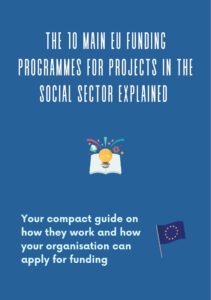
Find out which 10 EU programmes offer grants for projects in the social sector, what the conditions for funding are and how you can apply.
Online Workshop
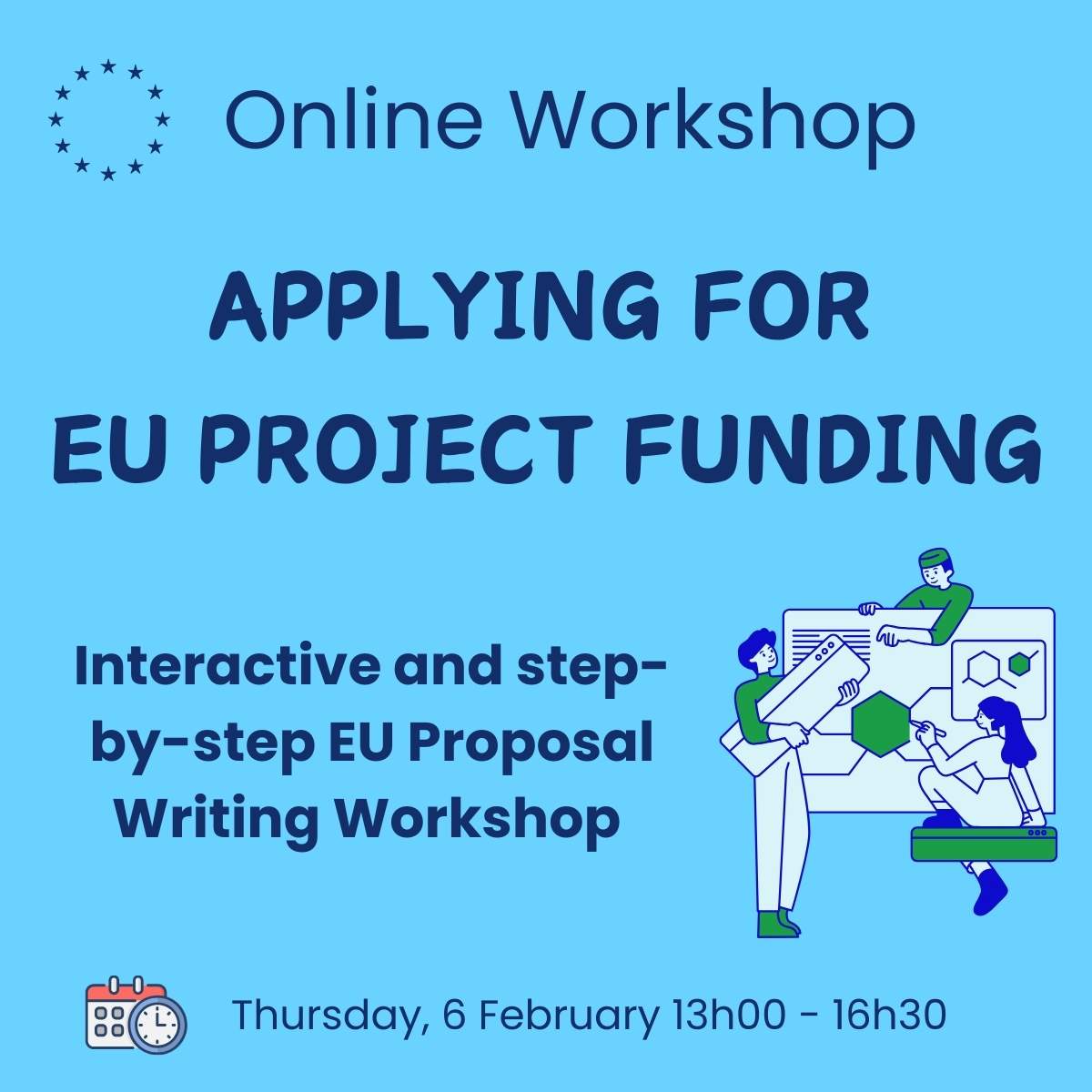
Interactive and step-by-step EU Proposal Writing Workshop
On 6 February 2025 from 13h00-16h30